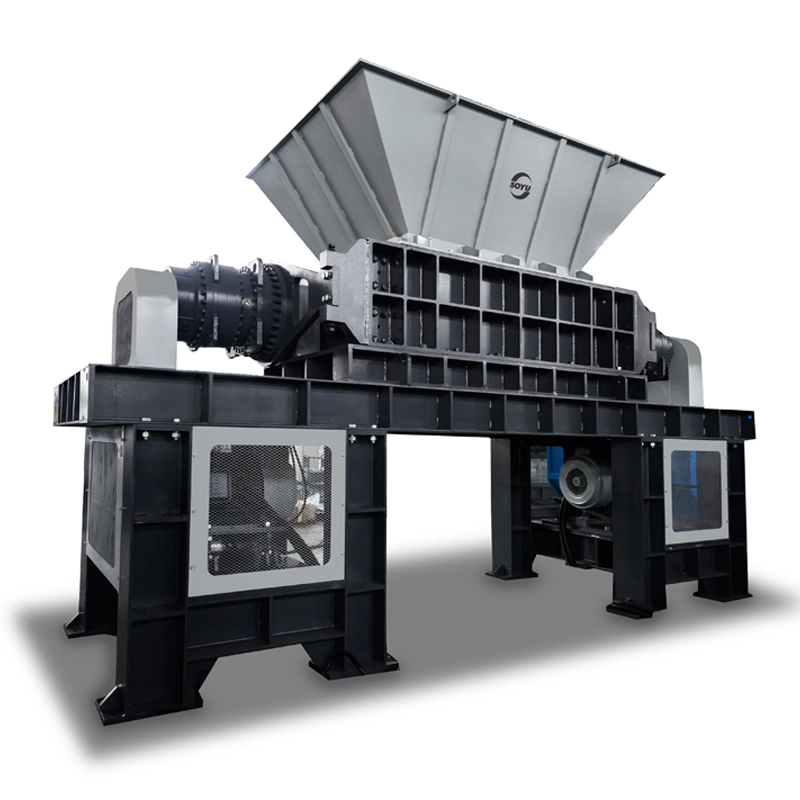
Industrial Shredder Configuration Guide

Twin Shaft Shredder – Industrial Shredder Configuration

Industrial Shredder Configuration Guide

A twin shaft shredder reduces material by tearing rather than crushing, and the configuration you choose decides how well that principle fits what you actually feed it. This guide walks through the five variables that change the machine on your floor — cutter setup, drive train, output control, feed system and wear package — so that when you specify a twin shaft industrial shredder, every choice is tied to a fact you can confirm with the manufacturer rather than a number you have to guess.

Twin-Shaft Industrial Shredder

What A Twin Shaft Industrial Shredder Is

Two counter-rotating shafts carry intermeshing cutting blades that grab, tear and shear incoming material, so bulky items are pulled into the chamber instead of riding on top of it. The machine runs low-speed and high-torque, which is what makes it a practical primary reduction unit ahead of a granulator or secondary shredder. Configurations without a sizing screen do not rely on a screen to control the discharged particle size; actual output depends on the material and the cutter configuration. The drive can be a high-efficiency electric motor or a heavy-duty hydraulic drive option, and motor power and machine configuration vary by model.

Counter-rotating intermeshing blades Two shafts of intermeshing cutters grab, tear and shear material as it enters the chamber.
Low-speed, high-torque Size reduction is driven by torque and shearing force rather than by rotor speed.
Screen-less configuration available No sizing screen is used to set the discharged particle size in these builds.
Electric or hydraulic drive Both a high-efficiency electric motor and a heavy-duty hydraulic drive option are integrated.
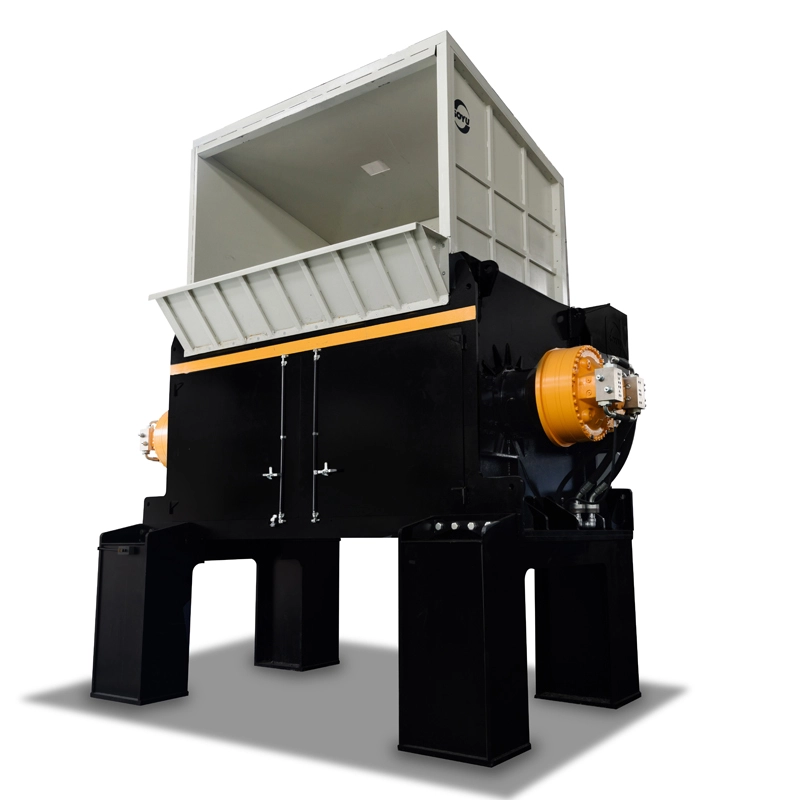
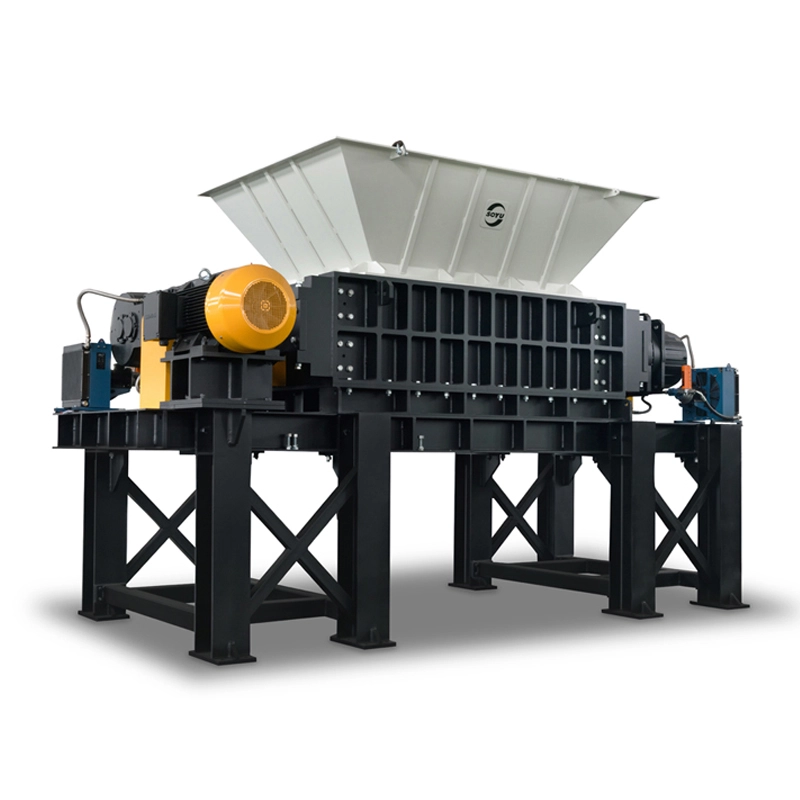
Heavy-duty twin-shaft industrial shredder cutting chamber and rotor assembly

Cutter Configuration, Blades And Wear Protection

The cutting system is the part of the specification that most directly decides whether your material is pulled in, torn apart and released at a useful size.

  • Blade material: cutters are manufactured from CrMoV superior alloy steel and vacuum heat-treated for exceptional toughness and wear resistance.
  • Blade arrangement: the intermeshing blade layout lets the rotors grab, tear and shred large, awkward items instead of pushing them around.
  • Rotor build: a precision-engineered, high-strength rotor system is designed for maximum shearing force under continuous duty.

Around the rotors, the shredding chamber is lined with HARDOX™ wear-resistant steel plates, which the manufacturer states extends service life and reduces maintenance costs.

Your decision: bring the hardest and most abrasive item in your stream to the sizing conversation. Blade configuration and the wear package are confirmed against that material before an order is placed.

Drive Train: Electric Motor Or Heavy-Duty Hydraulic

The machine integrates both a high-efficiency electric motor and a heavy-duty hydraulic drive option. Use the table to work out which route belongs in your specification, then confirm the rating with the manufacturer.

Decision point Electric motor drive Heavy-duty hydraulic drive
What the option is A high-efficiency electric motor powering the shafts through the machine’s reduction train. A heavy-duty hydraulic drive offered as the alternative configuration of the same shredder.
How it is described on the machine The standard electric configuration, listed alongside the hydraulic option in the drive and control section. The heavy-duty hydraulic option, selected at configuration rather than fitted as a later accessory.
What it changes for you Motor power is stated per model, so the rating follows the model and cutter setup you pick rather than a fixed figure. Motor power and machine configuration vary by model here too, so the drive is specified together with the shredder, not separately.
What to confirm before specifying Site supply and starting conditions, the motor power offered for your model, and how the control system connects to your plant. Hydraulic system maintenance routines, oil and cooling requirements, and how the drive interfaces with the intelligent control arrangement.
Choose this if… You want the standard configuration for a stationary plant with a stable electrical supply, and a familiar maintenance routine. Your duty is heavy enough that you want the heavy-duty drive route evaluated by the manufacturer before the configuration is fixed.

Motor power and machine configuration vary by model to suit different material characteristics and processing requirements. The drive rating is therefore confirmed at quotation rather than quoted from a fixed table.

Screen vs. Screen-Less Output Control

On many shredders a sizing screen under the rotor sets the largest particle that can leave the chamber. In a screen-less configuration the machine does not rely on a screen to control the discharged particle size at all.

That is not a promise of a fixed output — the result depends on the material being processed and on the cutter configuration fitted to the rotors. Coarse, defined output is therefore engineered into the cutting system, not read off a screen aperture.

  • Ask for screen-less when the machine is the primary reduction step and a downstream stage will govern the final specification.
  • Ask about a sizing screen when a downstream process requires a maximum discharge size that has to be respected.
  • Confirm either way that output size is matched to your material and cutter configuration in writing.

Your decision: describe the downstream equipment and the size it needs, then let cutter configuration be set against that target instead of assuming a screen exists.

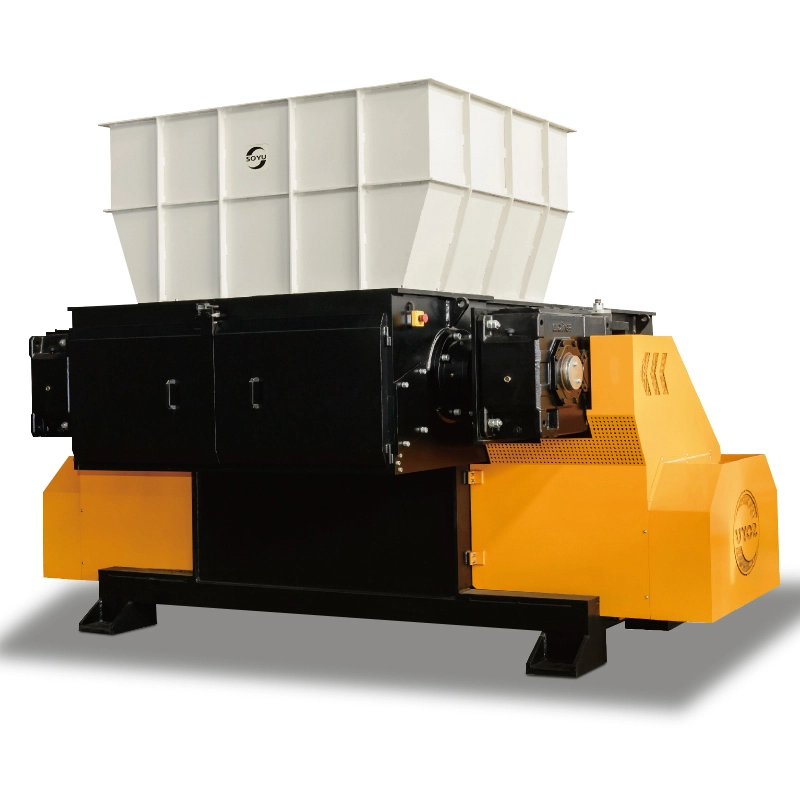
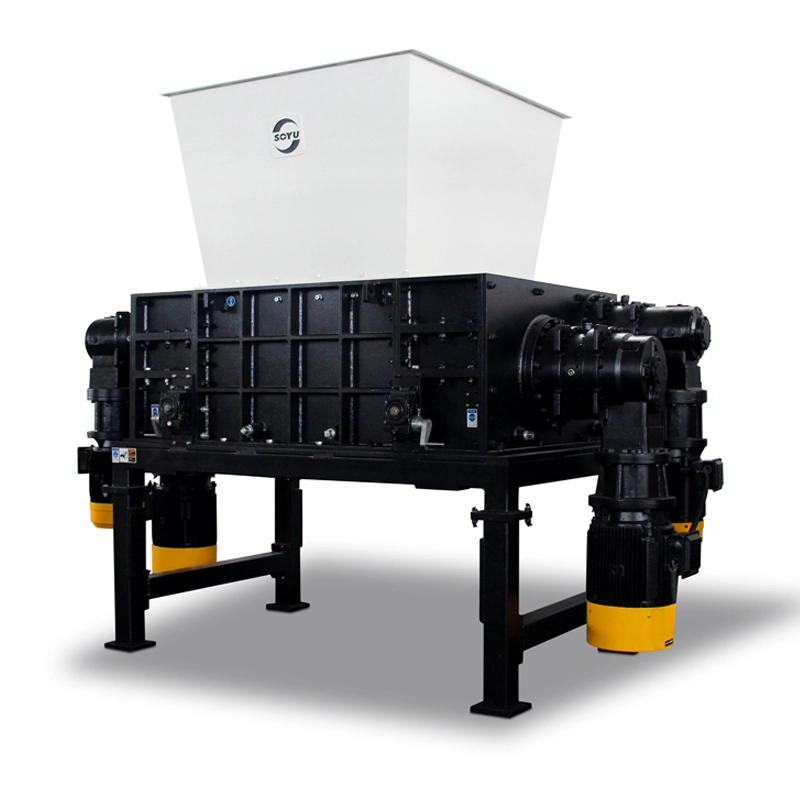
Twin-shaft industrial shredder discharge area showing screen-less output configuration
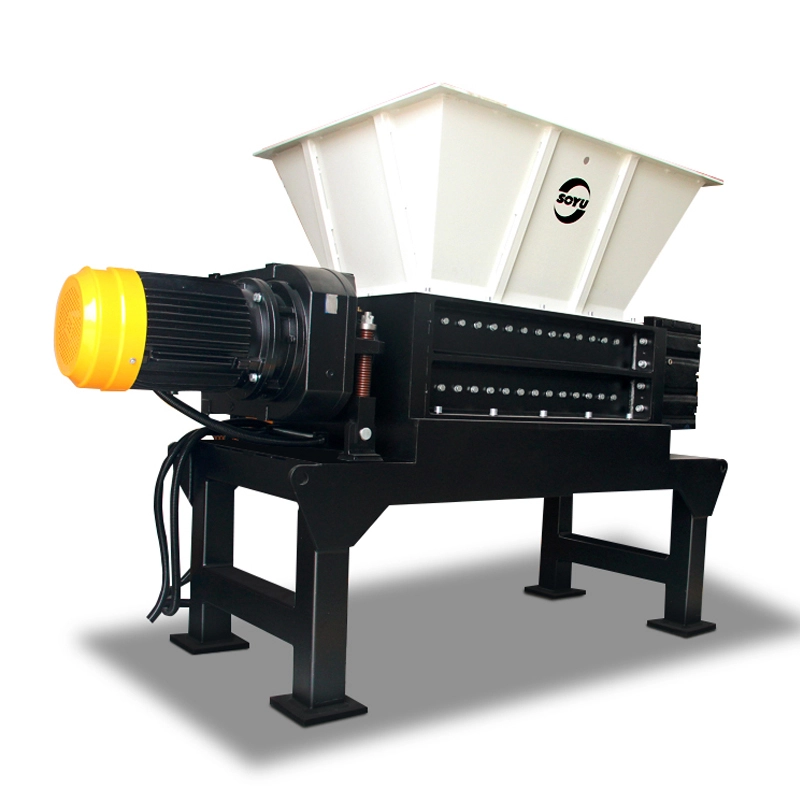
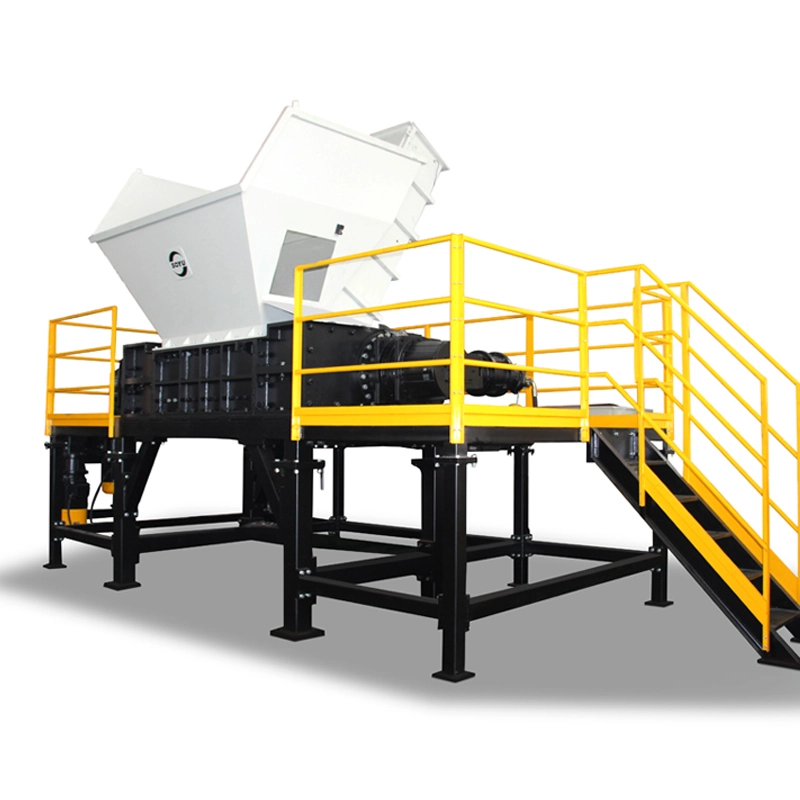
Twin-shaft industrial shredder feeding arrangement for bulky and hollow material

Feed System And Hollow-Product Handling

How material reaches the rotors decides whether the machine runs at a steady load or in bursts. The manufacturer offers optional hydraulic feeding systems that can help improve material engagement for hollow products.

That option matters most when you process drums, IBC containers, crates and other bulky industrial packaging — shapes that tend to sit on top of the cutters instead of being drawn between them.

  • Feed arrangement is part of the configuration, so raise it while the machine is being specified rather than after the order.
  • Material form is the deciding input: whole or crushed drums, loose rigid waste, or pre-sorted bulky items each behave differently in the chamber.

Your decision: if hollow items dominate your stream, ask for a hydraulic feeding system to be included in the quotation so the layout is defined from the start.

Material Stream × Configuration Fit Matrix

Five streams are named for this machine. Each row shows which configuration lever actually matters for that material and what you should bring to the sizing conversation.

Material stream What decides the fit What you should confirm
Metal & automotive recycling Car body shells, metal drums, scrap steel, aluminium scrap and selected automotive components, with heavy-duty configurations available. The heaviest single piece in the stream, and whether drums arrive whole or crushed.
Tires & rubber recycling Passenger car tires, truck tires and selected OTR tires, depending on cutter design, machine size and torque. Tire categories and sizes by volume — OTR acceptance is assessed case by case.
Plastics & industrial containers Plastic drums, IBC containers, rigid plastic waste and bulky industrial packaging. Whether hollow containers dominate the stream, which points to an optional hydraulic feeding system.
Municipal & industrial solid waste Selected MSW, bulky waste and industrial solid waste for primary size reduction and preparation for downstream recycling or RDF/SRF production. The output specification your downstream process or fuel standard requires.
Electronic & bulky waste Selected electronic scrap, household appliances, furniture and mattresses, subject to pre-sorting. The pre-sorting regime in place, and which components are removed before shredding.

Material suitability and equipment configuration should be confirmed with SOYU before processing. Hazardous or medical waste applications require a dedicated technical assessment and compliance with applicable safety and environmental regulations.

Scenario To Specification: Four Common Starting Points

Read the scenario that matches your plant, note the product fact attached to it, and act on the decision line before you speak to the manufacturer.

Scenario 01

Car body shells and metal drums

Product fact: Heavy-duty configurations are available for metal and automotive recycling, covering car body shells, metal drums, scrap steel and selected automotive components.

Your decision: Specify the heavy-duty build first, then state the heaviest single piece and whether drums are processed whole.

Send your metal stream details
Scenario 02

Truck and OTR tires

Product fact: Tire acceptance depends on cutter design, machine size and torque, with selected OTR tires handled case by case.

Your decision: List tire categories and approximate volumes, separate OTR sizes out, and ask for them to be assessed individually.

Describe your tire mix

Scenario 03

Plastic drums and IBC containers

Product fact: Optional hydraulic feeding systems can help improve material engagement for hollow products.

Your decision: Ask for the feeding option to be quoted inside the original configuration, not added after the layout is fixed.

Request a fed configuration

Scenario 04

MSW into RDF or SRF

Product fact: Selected MSW and bulky industrial solid waste are reduced as a primary step and prepared for downstream recycling or RDF/SRF production.

Your decision: Write down the downstream fuel or recycling specification first, then have cutter configuration matched to it.

Share your output target
SOYU heavy-duty twin-shaft industrial shredder for metal and bulky waste recycling

Machine Facts At A Glance

Machine typeIndustrial twin shaft shredder (double shaft)
Reduction principleCounter-rotating, intermeshing cutting blades grab, tear and shear
Operating characterLow-speed, high-torque size reduction
DriveHigh-efficiency electric motor, or heavy-duty hydraulic drive option
Output controlScreen-less configuration available; size depends on material and cutter configuration
BladesCrMoV superior alloy steel, vacuum heat-treated
Chamber wear protectionHARDOX™ wear-resistant steel plates lining the shredding chamber
Feed optionOptional hydraulic feeding systems for hollow products
Power and configurationVary by model and are confirmed at quotation

Build Your Quotation Around Your Material

Tell the manufacturer what you feed, how big the heaviest item is, whether hollow containers are involved, and what the downstream stage needs. Cutter configuration, drive train, feed system and wear package can then be specified together, and motor power and machine configuration confirmed for your model. Customisation and multi-unit projects are handled through the same enquiry route.

Related Reading

Three notes to help clarify product requirements before contacting the supplier.

Twin Shaft Shredders vs. Single Shaft Shredders in Coarse Waste Processing

Twin and single shaft shredders divide the work in a waste line between first-stage volume reduction and later controlled sizing.

Read article

Supplier Support for Twin Shaft Shredders in Recycling Plants

Supplier support for a twin shaft shredder is easiest to understand through the recycling line it serves, not through a price sheet or a supplier ranking.

Read article

How Do You Source a Heavy-Duty Twin Shaft Shredder Manufacturer?

Sourcing a heavy-duty twin shaft shredder manufacturer starts with defining the feed material, hourly throughput, and required output strip width, then using those facts to judge blade, drive, and…

Read article

Frequently Asked Questions

how does a twin shaft industrial shredder reduce material?

two counter-rotating shafts carry intermeshing cutting blades that grab, tear and shear incoming material. the machine works at low speed and high torque, which suits primary size reduction of bulky items ahead of a secondary shredding or granulating stage.

why do some configurations have no sizing screen?

in screen-less configurations the machine does not rely on a screen to control the discharged particle size. actual output depends on the material being processed and on the cutter configuration, so output requirements are matched through the cutting system rather than a screen aperture.

should i specify the electric motor or the hydraulic drive?

the machine integrates both a high-efficiency electric motor and a heavy-duty hydraulic drive option. because motor power and machine configuration vary by model, the right drive for your duty is confirmed during quotation, once your material and site conditions are known.

what blades and wear protection are used?

blades are manufactured from crmov superior alloy steel and vacuum heat-treated for toughness and wear resistance. the shredding chamber is lined with hardox™ wear-resistant steel plates, which the manufacturer states extends service life and reduces maintenance costs.

can it handle drums, ibc containers and other hollow items?

yes, these fall within the plastics and industrial containers stream. optional hydraulic feeding systems can help improve material engagement for hollow products, and that option is defined while the machine configuration is being set rather than added afterwards.

where do i get motor power and throughput figures?

those figures vary by model and are not fixed for the range, so they are confirmed with the manufacturer against your material and configuration. material suitability and equipment configuration should be confirmed with soyu before processing, and hazardous or medical waste requires a dedicated technical assessment.

Nous utilisons Cookie pour améliorer votre expérience en ligne. En continuant à naviguer sur ce site Web, vous acceptez notre utilisation des cookies. Cookie .